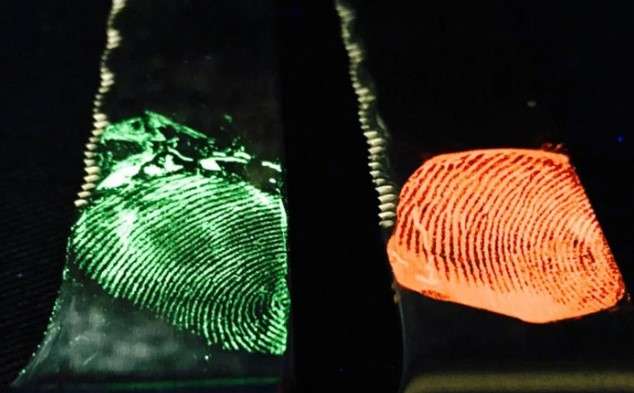
Fingerprints are one of the most fascinating biological features of the human body. No two individuals—past, present, or future—are believed to share identical fingerprints. This uniqueness has made fingerprints a cornerstone of forensic science, biometric security, and identity verification.
But what exactly makes fingerprints unique? Are they determined by genetics, environment, or randomness? In this in-depth, SEO-optimized guide, we will explore the science behind fingerprint formation, why they differ between individuals, and how they contribute to human evolution and technology.
What Are Fingerprints?
Fingerprints are the patterns of raised ridges and valleys found on the surface of human fingertips. These ridges are scientifically known as friction ridges, and they play a critical role in both touch sensitivity and grip.
Each ridge contains tiny pores connected to sweat glands beneath the skin. When you touch a surface, sweat is deposited, leaving behind a distinct impression—your fingerprint.
Are Fingerprints Truly Unique?
One of the most widely accepted scientific facts is that no two people share the same fingerprints. Even identical twins—who share nearly identical DNA—have completely different fingerprint patterns.
Scientists estimate that the probability of two people having identical fingerprints is approximately 1 in 64 billion, making fingerprints even more unique than DNA in practical identification.
This extraordinary uniqueness is why fingerprints are used worldwide in:
- Criminal investigations
- Border security systems
- Smartphone authentication
- Banking and financial verification
How Fingerprints Form in the Womb
Early Development Stage
Fingerprints begin forming during fetal development, typically around the 150th day of pregnancy. Once formed, they remain unchanged throughout a person’s life.
At this stage, the skin develops specialized structures known as volar pads—temporary swellings on the fingertips.
The Role of Volar Pads
The size, shape, and position of these pads determine the basic fingerprint pattern, such as:
- Loops
- Whorls
- Arches
Even slight variations in how these pads grow can lead to completely different patterns between individuals.
Cell Growth and Ridge Formation
As the fetus develops:
- Skin layers grow at different rates
- Inner layers push outward
- The outer layer folds, forming ridges
These ridges initially form in parallel but later branch, split, and intersect, creating complex patterns.
The Role of Randomness in Fingerprint Uniqueness
One of the most important reasons fingerprints are unique is random developmental variation.
Unlike eye color or hair color, which are strongly determined by genetics, fingerprints are influenced by unpredictable biological processes.
Key Random Factors Include:
- Position of the fetus in the womb
- Pressure from surrounding amniotic fluid
- Blood flow and capillary development
- Growth rate of skin cells
- Movement of the fetus
These factors interact in complex ways, making it impossible to predict or replicate fingerprint patterns—even in identical twins.
Genetics vs Environment: Which Matters More?
Fingerprint formation is a combination of genetic influence and environmental randomness.
Genetic Influence
- Determines general structure (loops, whorls, arches)
- Influences skin growth patterns
Environmental Influence
- Fine details (ridge endings, bifurcations)
- Unique micro-patterns
Because of this combination, fingerprints are partly inherited but largely shaped by chance.
Why Fingerprints Do Not Change Over Time
Once formed, fingerprints remain stable throughout life. This is because:
- They are embedded in the deep layers of skin
- Surface injuries usually do not affect underlying patterns
- Skin regenerates according to the original ridge structure
Only severe damage to deep skin layers can permanently alter fingerprints.
The Biological Purpose of Fingerprints
Although scientists are still studying their exact purpose, fingerprints are believed to provide several evolutionary advantages.
1. Enhanced Grip
Friction ridges increase contact between the skin and objects, improving grip and reducing slippage.
2. Improved Touch Sensitivity
Fingerprints amplify vibrations when touching surfaces, enhancing tactile perception. Research shows they can increase sensitivity by up to 100 times in certain conditions.
3. Better Object Recognition
The combination of friction and sensitivity allows humans to distinguish textures and shapes more effectively.
Fingerprint Classification Types
Fingerprints are generally categorized into three main types:
1. Loops
- Most common pattern
- Ridges enter from one side and exit the same side
2. Whorls
- Circular or spiral patterns
- More complex structure
3. Arches
- Simplest pattern
- Ridges flow from one side to the other without looping
Each type contains dozens of unique points, such as ridge endings and bifurcations, which are used in identification.
How Fingerprints Are Used in Modern Technology
Fingerprint recognition is one of the most widely used forms of biometric authentication today.
Applications Include:
- Smartphone unlocking
- Airport immigration systems
- Law enforcement databases
- Banking security systems
Modern systems can scan and match fingerprints within seconds, even among databases containing millions of records.
Are Fingerprints Really 100% Unique?
While fingerprints are considered unique, recent studies using artificial intelligence (AI) suggest that there may be subtle similarities between fingerprints from the same person across different fingers.
However, these findings do not significantly impact current forensic practices, and fingerprints remain one of the most reliable identification methods.
Fingerprint Uniqueness vs DNA
Although DNA is often seen as the ultimate identifier, fingerprints offer several advantages:
| Feature | Fingerprints | DNA |
|---|---|---|
| Collection Speed | Instant | Time-consuming |
| Equipment Needed | Minimal | Advanced lab required |
| Uniqueness | Extremely high | Extremely high |
| Practical Use | Everyday authentication | Legal and medical cases |
This is why fingerprints are still widely used for real-time identification systems.
Fun Facts About Fingerprints
- Every finger on your hand has a different pattern
- Animals like primates also have fingerprint-like structures
- Fingerprints were used as signatures in ancient civilizations
- A single fingerprint can contain around 50 unique points for identification
Conclusion
Fingerprints are a remarkable example of how biology, randomness, and evolution combine to create uniqueness in every human being. Formed before birth and unchanged throughout life, fingerprints serve both practical and biological purposes—from improving grip to enabling modern security systems.
Understanding why fingerprints are unique not only deepens our appreciation of human biology but also highlights the incredible complexity of developmental processes. As technology advances, fingerprints will continue to play a vital role in identity verification, security, and scientific research.
Final Thoughts
If there’s one key takeaway, it’s this:
Your fingerprints are a one-of-a-kind biological signature—shaped by both nature and chance, and impossible to replicate.
And that’s what makes them truly extraordinary.