
In popular culture, tumbleweed is often portrayed as a harmless, even humorous symbol of the American Wild West—rolling gently across empty roads in old movies. However, reality tells a very different story. In many parts of the United States, tumbleweed (Russian thistle) has become a serious environmental and infrastructural problem, earning its reputation as a “nightmare” for American residents.
This article explores the science, history, ecological impact, and real-world dangers of tumbleweed, while providing valuable insights into why this seemingly innocent plant has become such a persistent issue.
What Is Tumbleweed?
Tumbleweed is not a single plant species but a growth form seen in several types of plants. The most notorious species in the United States is Kali tragus, also known as Russian thistle.
Unlike typical plants, tumbleweed has a unique life cycle:
- It grows as a normal plant during spring and summer
- Dries out in autumn
- Breaks off from its roots
- Rolls across the landscape driven by wind
As it rolls, it spreads thousands of seeds across vast areas, making it highly efficient at reproduction.
According to research, a single tumbleweed plant can produce up to 200,000 seeds, contributing to its explosive spread.
The Origin of Tumbleweed in the United States
Surprisingly, tumbleweed is not native to America. It was accidentally introduced in the 1870s through contaminated flax seeds imported from Russia.
Initially, the plant spread slowly and went largely unnoticed. However, within a few decades, it became widespread across most U.S. states, especially in dry and flat regions such as the Midwest.
Today, tumbleweed is found almost everywhere in the U.S., except for a few regions like Alaska and Florida.
Why Tumbleweed Is a Nightmare for Americans
1. Rapid and Uncontrollable Spread
One of the main reasons tumbleweed is so problematic is its extraordinary reproductive ability.
- Each plant produces thousands of seeds
- Seeds are distributed over long distances via wind
- It thrives in poor soil and dry climates
This combination makes tumbleweed an invasive species that is extremely difficult to control.
2. Blocking Roads and Causing Accidents
Tumbleweed can accumulate in massive quantities, especially during strong winds.
Real-life incidents have shown that:
- Entire highways can be blocked
- Vehicles can be buried under piles of tumbleweed
- Visibility for drivers is severely reduced
In one notable case, hundreds of tumbleweeds piled up on a highway in Washington, even burying a large truck under a 4.5-meter-high mass.
These situations can lead to dangerous traffic accidents and significant disruption.
3. Threat to Homes and Infrastructure
Tumbleweed doesn’t just stay on roads—it invades residential areas.
Residents in affected regions often wake up to find:
- Doors completely blocked
- Gardens overrun
- Entire yards filled with dry plant debris
In extreme cases, cities have declared states of emergency due to tumbleweed infestations.
4. Fire Hazard Risk
Dry tumbleweed is highly flammable.
This creates serious risks:
- Easily catches fire in dry seasons
- Can spread flames rapidly across large areas
- May ignite when blown into power lines or buildings
Because tumbleweed moves with the wind, it can carry fire across distances, increasing the danger of wildfires.
5. Agricultural Damage
Tumbleweed negatively impacts farming by:
- Competing with crops for nutrients and water
- Blocking irrigation systems
- Hosting pests and diseases
Farmers often struggle to manage infestations, leading to reduced crop yields and increased costs.
6. Environmental Adaptability
Tumbleweed thrives in harsh conditions where many plants cannot survive.
Key advantages include:
- Low water requirements
- High salt tolerance
- Ability to grow in deserts, grasslands, and coastal areas
This adaptability allows it to spread rapidly across diverse environments, making eradication extremely challenging.
The Science Behind Its Spread
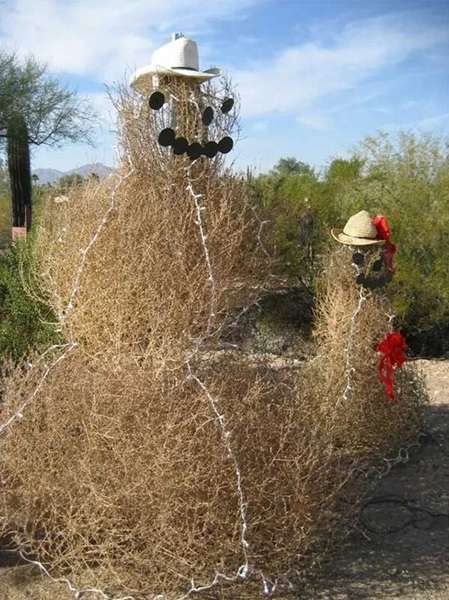
The success of tumbleweed lies in its evolutionary strategy.
Instead of relying on animals or water to disperse seeds, it uses wind as a transportation system.
As it rolls:
- The plant acts like a natural seed dispersal machine
- Seeds are scattered continuously
- New plants grow wherever seeds land
This process creates a self-sustaining cycle of expansion, making tumbleweed one of the most efficient invasive plants.
Why the U.S. Landscape Makes It Worse
Geography plays a crucial role in the tumbleweed problem.
The United States has:
- Large flat plains
- Strong seasonal winds
- Open landscapes with few natural barriers
These conditions create the perfect environment for tumbleweed movement.
As a result, tumbleweed can travel long distances without obstruction, spreading rapidly across states.
Real-Life Impact on Communities
Tumbleweed infestations are not just theoretical—they have real consequences.
Urban Impact
- Roads blocked
- Emergency services delayed
- Increased cleanup costs
Rural Impact
- Crop damage
- Livestock disruption
- Increased fire risk
Economic Impact
- Cost of removal and control
- Infrastructure damage
- Losses in agriculture
Can Tumbleweed Be Controlled?
Despite efforts, controlling tumbleweed remains difficult.
Common Methods
1. Herbicides
Used to kill young plants before they mature.
Limitations:
- Expensive
- Requires repeated application
2. Mechanical Removal
Includes cutting or pulling plants manually.
Challenges:
- Labor-intensive
- Not feasible for large infestations
3. Preventive Measures
- Removing plants before seed production
- Monitoring early growth stages
Even with these methods, complete eradication is nearly impossible due to the plant’s resilience and reproduction rate.
The Ecological Paradox
Interestingly, tumbleweed is not entirely harmful.
In its early stages:
- It provides food for some animals
- Can serve as emergency livestock feed
During the Dust Bowl of the 1930s, tumbleweed was even used to prevent livestock starvation.
However, these benefits are far outweighed by its negative impact in modern ecosystems.
SEO Insights: Why This Topic Matters
From an SEO perspective, this topic has strong potential due to:
- High curiosity factor (“why is tumbleweed dangerous?”)
- Educational value
- Relevance to environmental and ecological discussions
Target keywords include:
- Tumbleweed danger
- Why tumbleweed is a problem
- Invasive plants in the USA
- Russian thistle impact
Conclusion
Tumbleweed may look harmless in movies, but in reality, it is a serious environmental and societal challenge in the United States.
Its combination of:
- Rapid reproduction
- Wind-driven movement
- High adaptability
- Destructive impact
makes it one of the most problematic invasive plants in North America.
Understanding tumbleweed is not just about learning biology—it’s about recognizing how small ecological imbalances can grow into large-scale problems.