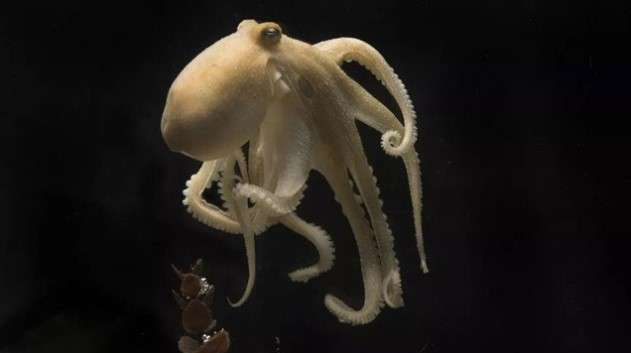
The ocean is full of mysteries, but few are as disturbing—and fascinating—as the behavior of female octopuses after reproduction. In some species, the mother not only stops eating but may harm herself, tear her own skin, and even consume parts of her own body. This phenomenon has puzzled scientists for decades and sparked widespread curiosity online.
What Happens to an Octopus After Reproduction?
Octopuses have one of the most unusual life cycles in the animal kingdom. Unlike many animals that reproduce multiple times, octopuses follow a strategy called semelparity—they reproduce only once in their lifetime and then die.
The Female Octopus Lifecycle
After mating, the female octopus:
- Lays thousands of eggs
- Guards them intensely for months
- Stops eating entirely
- Becomes weak and disoriented
- Eventually dies shortly after the eggs hatch
During this time, she dedicates 100% of her energy to protecting her offspring, often at the cost of her own life.
Do Octopuses Really Eat Themselves?
Yes—but not in the way you might think.
In the later stages of life after reproduction, female octopuses may:
- Bite their own arms
- Tear off pieces of skin
- Engage in self-destructive behavior
- In extreme cases, consume parts of their own body
Scientists describe this as a form of self-mutilation triggered by biological changes, not conscious decision-making.
This behavior is part of a larger process known as senescence, where the body rapidly deteriorates after reproduction.
The Key Cause: Hormonal Changes in the Optic Gland
The most important factor behind this shocking behavior is a small but powerful organ: the optic gland.
What is the Optic Gland?
- Located near the octopus’s eyes
- Similar in function to the human pituitary gland
- Controls reproduction and aging
After the female lays eggs, the optic gland releases a cascade of hormones that:
- Shut down appetite
- Disrupt normal metabolism
- Trigger tissue degeneration
- Lead to self-destructive behaviors
A “Death Program” in the Body
Research shows that this is not accidental—it is a pre-programmed biological process. Even if external conditions improve, the octopus cannot reverse it.
In fact, experiments have shown that removing the optic gland can extend the octopus’s life, proving its central role in triggering death.
Why Do Octopuses Stop Eating?
One of the most tragic aspects of this process is that female octopuses refuse to eat—even when food is available.
Biological Explanation
Hormones from the optic gland effectively turn off the feeding instinct.
Consequences
- Severe weight loss
- Muscle breakdown
- Weakness and exhaustion
- Eventual death from starvation
This starvation contributes to the physical decline and may partially explain why they begin damaging their own bodies.
Why Would Evolution Allow This?
At first glance, this behavior seems counterproductive. Why would an animal evolve to kill itself after reproduction?
The answer lies in evolutionary efficiency and survival strategy.
1. Maximizing Reproductive Success
Octopuses invest everything into one reproductive event.
- Producing thousands of eggs requires enormous energy
- Guarding eggs ensures higher survival rates
- Eliminating distractions (like hunting) improves protection
This strategy increases the likelihood that offspring survive, even if the mother does not.
2. Preventing Cannibalism of Offspring
Octopuses are naturally cannibalistic creatures.
Scientists suggest that programmed death may prevent the mother from:
- Eating her own eggs
- Competing with her offspring for food
This ensures that the next generation has a better chance to survive.
3. Energy Allocation Strategy
Instead of splitting energy between survival and reproduction, octopuses:
- Invest all resources into reproduction
- Sacrifice long-term survival
This is known as a life-history trade-off, common in harsh or unpredictable environments.
4. Reducing Competition in the Ecosystem
If parent octopuses survived:
- They would compete with their offspring
- Resources would become scarce
By dying, they leave behind:
- More food
- Less competition
This supports population sustainability over time.
Why Do Octopuses Harm Themselves Specifically?
The self-destructive behavior is still being studied, but scientists have identified key triggers:
Chemical Imbalance
After reproduction, the body produces unusual compounds, including:
- Steroid hormones
- Cholesterol-related molecules
These disrupt normal brain and body function.
Neurological Breakdown
As hormone levels change:
- The nervous system becomes unstable
- Behavior becomes erratic
- Pain responses may be altered
This leads to irrational and harmful actions, including self-injury.
Loss of Behavioral Control
The octopus essentially loses its ability to:
- Regulate feeding
- Maintain body integrity
- Respond normally to stimuli
This explains why the behavior appears extreme and unnatural.
Do Male Octopuses Do the Same Thing?
Male octopuses also die after reproduction—but differently.
Male Behavior After Mating
- Become weak and inactive
- Stop eating
- Die within months
Unlike females, males typically do not exhibit extreme self-mutilation, but their decline is still hormonally driven.
Is This Behavior Unique to Octopuses?
No—but octopuses are among the most extreme examples.
Other animals that die after reproduction include:
- Pacific salmon
- Some insects (like mayflies)
- Certain spiders
However, the self-destructive behavior seen in octopuses is unusually dramatic, making them unique in the animal kingdom.
What Can Humans Learn From This?
While this behavior may seem purely biological, it offers valuable insights:
1. The Power of Hormones
Small chemical changes can dramatically alter:
- Behavior
- Appetite
- Survival
2. Evolution is About Survival of Genes, Not Individuals
Nature prioritizes:
- Reproduction success
- Genetic continuation
Even if it means sacrificing the parent.
3. Extreme Parental Investment Exists in Nature
Octopuses demonstrate one of the most intense examples of:
- Maternal care
- Biological sacrifice
Conclusion: A Tragic but Brilliant Survival Strategy
The idea that octopuses eat themselves after reproduction is both shocking and deeply fascinating. But when viewed through the lens of science, it becomes clear that this behavior is not madness—it is biology in its most extreme form.
Driven by hormonal changes, evolutionary pressure, and survival strategy, the octopus undergoes a programmed decline that ensures the next generation has the best chance to live.
In the end, this phenomenon reminds us of a powerful truth:
In nature, survival is not always about living longer—it’s about ensuring life continues.