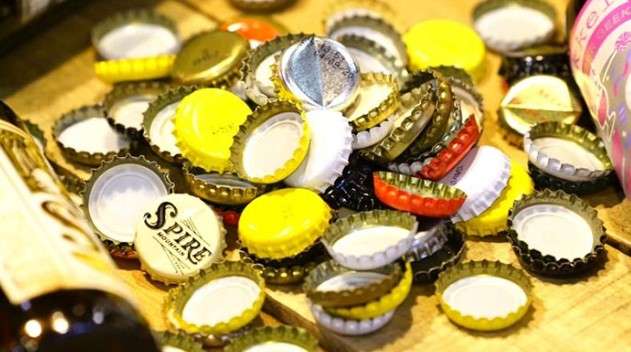
Have you ever opened a bottle of beer and noticed the small ridges around the cap? If you take a closer look, you’ll find something fascinating: almost every beer bottle cap has exactly 21 teeth. This is not a coincidence or a decorative choice—it’s the result of over a century of engineering, testing, and optimization.
The Origin of the Beer Bottle Cap
The Invention That Changed Everything
The modern beer bottle cap, known as the “crown cork,” was invented in 1892 by American engineer William Painter. Before this innovation, beverages were sealed using corks or ceramic stoppers—methods that often failed to keep drinks fresh.
Painter’s invention introduced a metal cap with a liner that could create an airtight seal, preventing carbonation from escaping. This breakthrough revolutionized the beverage industry and allowed beer to be stored, transported, and consumed more efficiently.
From 24 Teeth to 21 Teeth
Interestingly, the first bottle caps didn’t have 21 teeth—they had 24 ridges. However, this design quickly revealed problems:
- Caps were too tight and difficult to remove
- They could damage bottle necks
- They often jammed in automated machinery
Through continuous testing, engineers gradually reduced the number of ridges—from 24 to 23, then 22—until they discovered the perfect number: 21.
Why Exactly 21 Teeth? The Core Engineering Principles
The number 21 is not random—it represents a perfect balance between multiple technical factors. Let’s break down the key reasons.
1. Optimal Sealing for Carbonated Beverages
Beer contains carbon dioxide (CO₂), which creates internal pressure inside the bottle. If the seal is not perfect:
- Gas escapes → Beer goes flat
- Oxygen enters → Beer spoils
The 21 ridges ensure uniform pressure distribution around the bottle neck, creating an airtight seal that preserves freshness and carbonation.
👉 Too few ridges = weak seal
👉 Too many ridges = uneven crimping
21 is the sweet spot.
2. Even Pressure Distribution
Each tooth (ridge) applies pressure when the cap is crimped onto the bottle. With 21 evenly spaced ridges:
- Force is distributed symmetrically
- The cap grips the bottle securely
- Leakage risks are minimized
This ensures that the cap can withstand the internal pressure of fizzy drinks without popping off.
3. Perfect Balance Between Strength and Flexibility
A bottle cap must be:
- Strong enough to hold pressure
- Flexible enough to be opened easily
If there are too many ridges, the cap becomes rigid and difficult to remove. If there are too few, it becomes weak.
With 21 teeth, manufacturers achieve:
✔ Strong sealing
✔ Easy opening
✔ Minimal material stress
4. Compatibility with Bottle Openers
Another critical factor is usability.
Bottle openers rely on leverage to lift the cap. The 21-tooth design:
- Provides consistent grip points
- Allows smooth and safe removal
- Reduces the risk of injury
Engineers optimized the number of ridges to ensure that caps could be opened efficiently and safely using standard tools.
5. Manufacturing Efficiency
As beverage production scaled globally, automation became essential. The number of ridges had to work seamlessly with machines.
With 21 teeth:
- Caps fit perfectly in automated capping systems
- Reduced risk of machine jams
- Improved production speed
This efficiency is one of the reasons why the design became an industry standard worldwide.
6. Friction and Grip Enhancement
The ridged design increases friction between the cap and the bottle neck.
Benefits include:
- Better grip during sealing
- Easier removal during opening
- Improved overall handling
The wavy edge structure also prevents slipping, making the process more user-friendly.
The Physics Behind the Design

Why Multiples Matter
Some engineers suggest that 21 works well because it is a multiple of 3, which aligns with basic stability principles in physics. Systems with evenly distributed contact points tend to be more stable and balanced.
While this is not the sole reason, it contributes to the overall effectiveness of the design.
Pressure + Geometry = Perfection
The success of the 21-tooth cap lies in the combination of:
- Circular geometry (even force distribution)
- Material flexibility (metal crimping)
- Internal gas pressure (carbonation)
Together, these factors create a highly optimized sealing system that has stood the test of time.
Why Not Use Screw Caps Instead?
You might wonder: why not use twist-off caps like plastic bottles?
The Answer: Performance
Traditional crown caps outperform screw caps in several ways:
- Better airtight sealing
- More reliable for long-term storage
- Less risk of gas leakage
For premium or export beers, maintaining carbonation and flavor is critical—making the 21-tooth cap the preferred choice.
Global Standardization: Why 21 Became Universal
Over time, the 21-tooth design was adopted worldwide and standardized under industrial guidelines (such as DIN standards).
Today:
- Almost all glass beer bottles use 21-tooth caps
- The design is applied to soft drinks and carbonated beverages
- It remains unchanged after more than 100 years
This is a testament to its efficiency, reliability, and simplicity.
Hidden Engineering in Everyday Life
The 21-tooth beer cap is a perfect example of how small details can have massive impact.
What seems like a simple object actually represents:
- Decades of experimentation
- Deep understanding of physics and materials
- Optimization for both users and machines
It’s a reminder that great design is often invisible—working perfectly without drawing attention.
SEO Insights: Why This Topic Matters
From an SEO perspective, this topic is highly valuable because it:
- Targets curiosity-driven keywords like
“why beer caps have 21 teeth” - Appeals to both science and general audiences
- Encourages high engagement and shareability
Content like this performs well because it combines:
✔ Education
✔ Curiosity
✔ Practical knowledge
Key Takeaways
Let’s summarize the most important points:
- Beer bottle caps have 21 teeth for optimal performance
- The design evolved from 24 ridges to 21 through testing
- It ensures:
- Airtight sealing
- Even pressure distribution
- Easy opening
- Manufacturing efficiency
- It has become a global standard for over a century
Conclusion
The next time you open a bottle of beer, take a moment to look at the cap. Those 21 tiny ridges are not just a design choice—they are the result of ingenious engineering and decades of refinement.
In a world obsessed with innovation, sometimes the most powerful solutions are the simplest ones—perfected over time and proven by experience.
The 21-tooth beer bottle cap is one of those rare designs that achieved near perfection—and never needed to change. 🍺