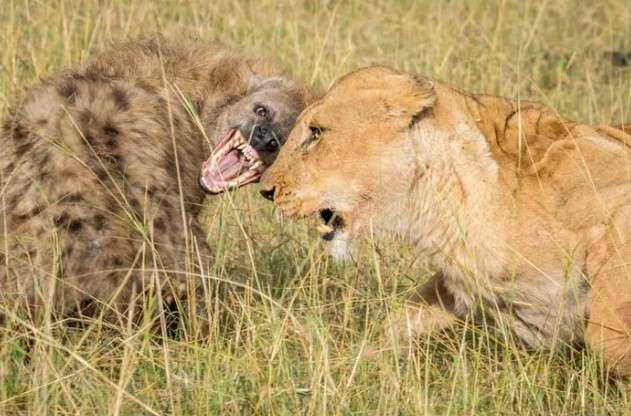
In the wild landscapes of Africa, few rivalries are as intense and fascinating as the ongoing conflict between the lion and the hyena. These two powerful predators are often portrayed as enemies in documentaries and films—and for good reason. Their relationship is not just occasional hostility; it is a complex, long-standing battle driven by survival, competition, and evolutionary behavior.
Understanding Lions and Hyenas: Apex Predators of Africa
Both lions and hyenas are dominant carnivores found across the African savanna. Despite belonging to different biological families, they share many similarities:
- Both are social animals that live in groups
- Both hunt medium to large prey
- Both occupy overlapping territories
However, these similarities are precisely what make them natural competitors.
The lion, often referred to as the “king of the jungle,” is a top predator with immense strength and coordinated hunting strategies. Hyenas, particularly the spotted hyena, are equally formidable, known for their intelligence, endurance, and strong social structures.
1. Competition for the Same Food Sources
Shared Diet Leads to Conflict
The primary reason lions and hyenas clash is simple: they hunt the same prey.
Both species target animals such as:
- Wildebeest
- Zebras
- Buffalo
Since these food sources are limited, especially during dry seasons, competition becomes fierce. When two top predators depend on the same prey, conflict is inevitable.
Studies show that their ecological niches overlap significantly, meaning they play similar roles in the ecosystem.
2. Territory Overlap and Constant Encounters
Living in the Same Habitat
Lions and hyenas inhabit the same regions of Africa, particularly grasslands and savannas. Their territories often overlap, leading to frequent encounters.
When two dominant species share the same space:
- They compete for hunting grounds
- They defend territory aggressively
- They encounter each other regularly
This constant proximity increases the likelihood of conflict and reinforces hostility over time.
3. Food Theft and Scavenging Behavior
Hyenas vs. Lions: Who Steals from Whom?
One of the most interesting aspects of this rivalry is kleptoparasitism—the act of stealing food.
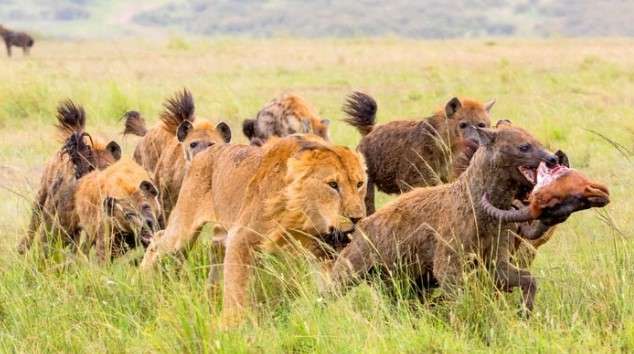
- Hyenas are often known for scavenging and stealing kills from lions
- However, lions also steal from hyenas when given the chance
Hyenas frequently follow lions, waiting for an opportunity to take over a kill. In response, lions aggressively defend their prey or retaliate violently.
This ongoing battle over food creates a cycle of mistrust and aggression.
4. Social Structure and Group Dynamics
Strength vs. Numbers
Lions and hyenas are both social animals, but their group structures differ:
- Lion prides: Usually consist of a few males and several females
- Hyena clans: Larger groups led by dominant females
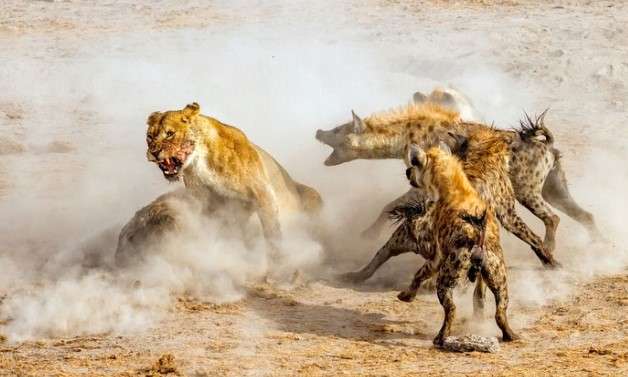
Hyena clans can include dozens of individuals, giving them a numerical advantage. In contrast, lions rely on their size and strength.
This leads to interesting outcomes:
- A single lion can dominate a hyena
- A group of hyenas can overpower lions
These dynamics create constant tension and strategic battles between the two species.
5. Evolutionary Rivalry and Survival Instinct
Natural Selection at Work
Over thousands of years, lions and hyenas have evolved as direct competitors. Their rivalry is not accidental—it is shaped by natural selection.
Key evolutionary factors include:
- Competing for limited resources
- Developing strategies to outcompete each other
- Passing down aggressive behaviors
This long-term competition has made both species more efficient hunters and survivors, but it has also cemented their hostility.
6. Violent Encounters and Deadly Clashes
When Conflict Turns Fatal
The rivalry between lions and hyenas often escalates into violent confrontations.
Documented cases show:
- Lions killing hyenas to reduce competition
- Hyenas attacking lion cubs
- Large-scale clashes lasting days
In one recorded instance, battles between the two species lasted for weeks in Ethiopia, highlighting the intensity of their conflict.
These encounters are not just random fights—they are strategic attempts to eliminate rivals and secure dominance.
7. Misconceptions About Hyenas
Not Just Scavengers
A common myth is that hyenas are merely scavengers. In reality:
- Hyenas are skilled hunters
- They can run at speeds up to 60 km/h
- They often hunt cooperatively and successfully
In fact, hyenas sometimes hunt more efficiently than lions. This challenges the traditional narrative and adds another layer to their rivalry.
8. The Role of Ecosystem Balance
Why This Rivalry Matters
Despite their hostility, the relationship between lions and hyenas plays a crucial role in maintaining ecological balance.
Their competition:
- Prevents overpopulation of prey species
- Encourages natural selection
- Maintains biodiversity
Without this rivalry, the ecosystem could become unbalanced, leading to overgrazing and environmental degradation.
9. Cultural Representation and Popular Media
The lion-hyena conflict has also been popularized in media, most notably in the movie The Lion King. While dramatized, the film reflects real-life tensions between these animals.
However, real-life interactions are far more complex than fictional portrayals, involving strategy, cooperation, and survival instincts.
10. Key Takeaways for Readers
If you’re studying wildlife, ecology, or simply curious about animal behavior, here are the most important insights:
- Lions and hyenas are natural competitors
- Their conflict is driven by food, territory, and survival
- Both species are highly intelligent and social
- Their rivalry is essential for ecosystem stability
Conclusion
The ongoing conflict between lions and hyenas is one of nature’s most compelling examples of survival-driven rivalry. Far from being simple enemies, these animals are locked in a complex relationship shaped by evolution, competition, and environmental pressures.
Understanding this dynamic not only reveals the harsh realities of life in the wild but also highlights the delicate balance that sustains ecosystems. By studying these interactions, we gain deeper insight into how nature maintains order through conflict.